A Forever stamp costs $0.82 in 2026 — and that number is the end of a long story, not the beginning of one. The stamp launched in 2007 at $0.41, and it has doubled over 19 years while never once losing its value for a 1-ounce letter. For a bulk buyer, that history is not trivia: it is the reason a stamp reserve works as a budget hedge, and the reason the price on the envelope matters less than the system behind it. This guide lays out the rate history, the current price table, and the math a mailroom actually needs.
Key Takeaways
- Forever stamp (1 oz letter): $0.82 as of July 12, 2026; launched 2007 at $0.41.
- Postcard: $0.65; 2 oz letter: $1.11; non-machinable stamp: $1.31; Global Forever: $1.75.
- A Forever stamp never expires for the service printed on it — it always covers a 1-ounce letter.
- Hold a 60–90 day reserve; reorder when it falls below 30 days.
- Budget from the current table, not from old guides — pre-July 2026 prices under-budget every mailing.
Current USPS Rates
| Mailpiece | 2026 USPS rate | Notes for bulk buyers |
|---|---|---|
| Forever stamp, 1 oz letter | $0.82 | Base unit for all First-Class letter budgeting |
| Each additional ounce | $0.29 | Weigh inserts before ordering; 2 oz letter = $1.11 |
| Postcard | $0.65 | Cheapest First-Class format for short messages |
| Non-machinable stamp (single-use) | $1.31 | $0.82 postage + $0.49 surcharge, sold as one stamp |
| Global Forever stamp, 1 oz | $1.75 | One stamp covers a 1 oz letter to any country |
| Large envelope, 1 oz | $1.69 | Flat-size mail; verify thickness and rigidity |
Older guides still quote pre-July 2026 rates. Planning a 1,000-piece mailing from them under-budgets postage by $40 or more. For a deeper rate reference, see our 2026 price and mailing-rules guide and our complete Forever stamp guide.
Rate History: 2007 to 2026
| Year | Forever stamp price | What changed |
|---|---|---|
| 2007 | $0.41 | Forever stamp launches as a non-denominated stamp |
| 2014 | $0.49 | First-Class rate crosses 49 cents |
| 2019 | $0.55 | Largest single-year jump in the series |
| 2023 | $0.66 | Rate passes two-thirds of a dollar |
| 2024 | $0.73 | Second increase in two years |
| July 2026 | $0.82 | Current rate under USPS Notice 123 |
The pattern is steady, not dramatic: roughly one increase every one to two years, averaging about 4 cents a year over the life of the stamp. A buyer who treats each increase as a surprise will always be caught short. A buyer who plans for it — a reserve, a reorder point, a quarterly budget review — turns the same pattern into a routine. See our guide to buying Forever stamps early for the reserve math.
What the $0.82 Buys a Bulk Mailer
| Monthly volume | Monthly postage at $0.82 | Annual postage |
|---|---|---|
| 500 letters | $410.00 | $4,920.00 |
| 1,000 letters | $820.00 | $9,840.00 |
| 2,500 letters | $2,050.00 | $24,600.00 |
| 5,000 letters | $4,100.00 | $49,200.00 |
| 10,000 letters | $8,200.00 | $98,400.00 |
Postage is a fixed, auditable line: quantity times $0.82, plus $0.29 per additional ounce, plus $0.49 per non-machinable piece (billed as the $1.31 stamp). There is no negotiation with the rate itself — the savings come from format choice, list hygiene, and buying discipline. A 1,000-piece mailing switched from letters to postcards saves $170 a month; a 5 percent undeliverable rate wastes $41 a month on a 1,000-piece mailing. Both are larger than any per-stamp discount a legitimate seller can offer, which is why the audit matters more than the bargain hunt. For pack-size planning, see our 100 vs. 500 vs. 1,000 stamp comparison.
A Reserve Policy That Survives the Next Increase
- Count monthly volume. Average the last three months of mailed pieces, including reply envelopes and thank-you notes.
- Set the reserve at 60 to 90 days. At 1,000 pieces a month, that is 2,000 to 3,000 stamps on hand.
- Set the reorder point at 30 days. When stock falls to one month of volume, order — do not wait for the shelf to empty.
- Store flat and dry. Keep sheets flat and rolls upright, away from heat and humidity, and count on arrival against the packing slip.
- Re-price the budget at every USPS announcement. When a new rate is announced, re-run the table above before the next order, not after it.
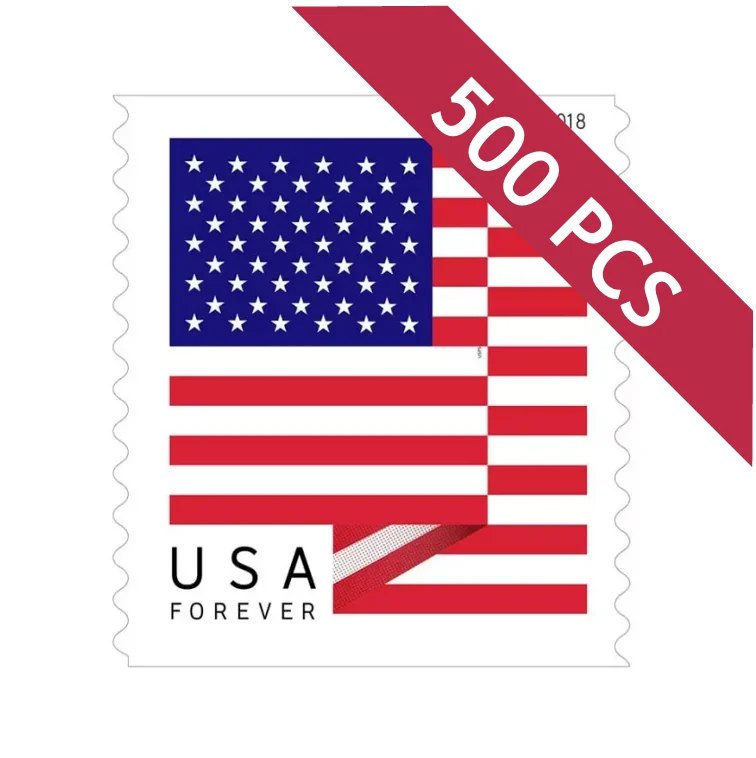
Frequently Asked Questions
How much does a Forever stamp cost in 2026?
A Forever stamp costs $0.82 for a 1-ounce First-Class letter, effective July 12, 2026. Each additional ounce costs $0.29, so a 2-ounce letter costs $1.11.
How much did a Forever stamp cost when it launched?
The Forever stamp launched in 2007 at $0.41. It reached $0.82 in July 2026 — double the launch price over 19 years, which is why a stamp bought years ago still mails a 1-ounce letter today.
Why do Forever stamps hold their value?
A Forever stamp is non-denominated: it always covers the current 1-ounce First-Class letter rate, whatever that rate becomes. That is the whole point of the design, and it is why bulk buyers treat a stamp reserve as a hedge against the next price change.
How many stamps should a business keep in reserve?
Hold 60 to 90 days of planned mailings in Forever stamps and reorder when the reserve falls below 30 days. That covers an announced rate change without tying up a year of cash in inventory.
What is the cheapest First-Class format?
A postcard at $0.65 is the cheapest First-Class format. It suits short messages, reminders, and announcements that do not need an envelope or privacy.
Sources
- USPS Notice 123, Price List (effective July 12, 2026) — First-Class Mail rates including the $0.82 Forever stamp, $0.29 additional ounce, and $1.75 Global Forever stamp.
- USPS Postal Store — Non-Machinable stamp listing at $1.31 ($0.82 postage plus $0.49 non-machinable surcharge).
We stock Forever stamps in rolls, sheets, and booklets in bulk quantities, inspected before dispatch and shipped tracked, so your reserve is genuine stock — not a gamble on a below-face offer. Browse our bulk stamp selection or read more business mailing tips to plan your next order.

Stamp enthusiast and part‑time columnist based in Los Angeles. With a background in office administration and a personal passion for collecting Forever Stamps, she provides readers with practical tips on buying, storing, and using stamps effectively.