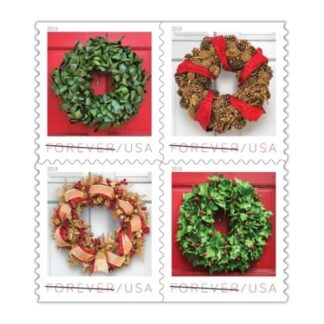
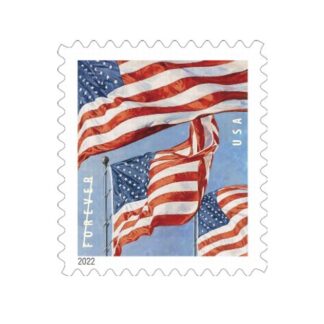
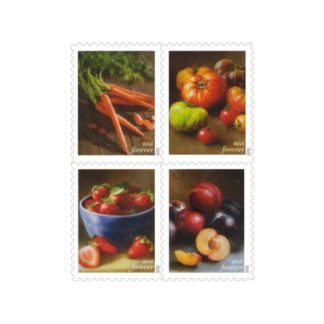
“Sites like BuyDiscountStamps.com offer verified, unused Forever stamps in sheets, coils, or rolls—often at 15%–25% below face value.”
— from the seller’s own savings-tips blog
No. A polished buying guide and a money-back promise are marketing copy, not proof. The same seller’s blog says legitimate discounts run 15% to 25% below face value — and then warns that 100 Forever stamps for $20 are “almost always counterfeit.” Its own store sells lots at 40% and 50% off face. A guide that contradicts its own store is not a trust signal. It is the evidence.
That contradiction is the whole check. You do not need to take a stranger’s word for whether a stamp seller is legitimate. Read what the seller says about the market, then read what the seller charges. When the two do not match, believe the price tag — it is the only part of the site that cannot be faked with adjectives.
The Guide Says 15–25%. The Store Sells 40–50% Off.
The seller’s savings-tips blog is written like a consumer-protection page. It explains that discount stamps are “legitimate, unused U.S. postage stamps sold below face value,” puts the normal discount at 5% to 25%, and names its own store as an example of a verified vendor selling “often at 15%–25% below face value.” The same blog warns readers that 100 Forever stamps for $20 are almost always counterfeit, and that no one sells them legally at that price.
Now look at the store behind the blog. A high-face-value lot listed this week carries $816.81 of face value and sells for $653.45 — 20% off, the outer edge of the blog’s own band. Two more lots on the same storefront go further: $1,370.28 of face for $822.17, which is 40% off, and $1,941.79 of face for $970.90, which is 50% off. The U.S. Postal Inspection Service puts its warning band at 20% to 50% below face value. The store’s lots sit inside that band while its blog describes 15% to 25% as the legitimate range.
This is not a rounding error. A seller that writes its own rules and then breaks them in its own shop is telling you, in its own words, that its guide is a sales prop. The guide exists to make the store look careful. The store exists to move lots at discounts the guide itself calls suspicious.

What a Buying Guide Can Prove — and What It Cannot
A buying guide proves that a seller can hire a writer. It proves nothing about the stamps. Here is what each familiar trust signal actually shows, and what it leaves unproven.
| What the site shows you | What it actually proves | What it does not prove |
|---|---|---|
| A detailed buying guide | Someone wrote an article | That the stamps are genuine, or that the seller follows its own advice |
| A money-back guarantee | The seller wrote a promise | That the seller will answer, accept a return, or pay it |
| Customer reviews on the page | The page displays reviews | That the reviewers exist, bought anything, or received genuine stamps |
| Secure checkout badges | The payment page uses encryption | That the seller ships genuine postage, or ships at all |
| A low price with a struck-through “original” price | The seller chose two numbers | That the higher number was ever a real price |
The pattern is the same in every row: the signal describes the website, not the stamps. A security researcher put it plainly in a recent counterfeit-postage guide: a seller can display a tracking estimate, a buyer-protection badge, and a generous return promise without proving what will arrive. None of those elements is an authentication service.
The one signal that does carry weight is also the one discount sellers work hardest to blur: the price itself. The Postal Inspection Service’s rule is simple and public. Discounts of 20% to 50% below face value are the counterfeit warning band. A seller inside that band is not offering a deal. It is offering a risk, and dressing it in a guide.
If you want the comparison done for you, start with the legitimate channels instead of the loudest ones: you can buy bulk Forever stamps online from a seller whose prices sit in single digits below face value, and check any other offer against that number before you pay.
The Guarantee, Read Word for Word
The lot page for the $816.81 lot carries this line, in full: “All usable postage is guaranteed to be in acceptable condition for mailing, or your money back.” Read it slowly, because the guarantee is narrower than it sounds.
First, it guarantees condition, not authenticity. “Acceptable condition for mailing” is the seller’s own phrase, and the same listing defines “usable condition” as stamps that “may be in partial sheets, books, rolls, and/or single stamps – or may contain slight imperfections.” A counterfeit stamp can be in acceptable physical condition. A genuine stamp can be in a partial sheet. The guarantee promises the stamps will look usable. It does not promise they are genuine.
Second, a guarantee is only as good as the seller behind it. Ask who honors it: a named business, a phone number that answers, a return address you can mail stamps back to. If the only answer is a sentence on a product page, the guarantee is not a safety net. It is a sentence on a product page.
Third, the guarantee does not cover the cost that actually hurts a bulk buyer: the mail itself. If a batch of letters goes out on counterfeit postage, the Postal Service treats that mail as abandoned and disposes of it. Your letters do not come back. Your customers do not get their reminders, your invoices do not get paid, and no money-back promise on the stamps refunds the business the mailing was supposed to do.
Compare that with how a legitimate seller’s guarantee reads. It names the condition, the inspection behind it, and the return path — and the seller answers the phone. The difference is not the wording. It is whether anyone is standing behind the words.

The Landed Total: 1,000 Letters a Month, Four Ways
Take a business that mails 1,000 standard one-ounce First-Class letters a month. Here is what that volume costs from each channel, at prices checked November 24, 2026.
| Channel | Per letter | 1,000 letters a month |
|---|---|---|
| USPS at face value | $0.82 | $820.00 |
| Metered mail / PC Postage | $0.78 | $780.00 |
| US Bulk Stamps 100-stamp packs | $0.69 | $690.00 |
| US Bulk Stamps 1,000-stamp flag coil | $0.559 | $559.00 |
The lot looks cheaper than the coil until you do the second half of the arithmetic. The $816.81 lot costs $653.45, which is $0.80 for every $1.00 of face value. At exact face value it would cover 996 letters — four fewer than the coil covers, for $94.45 more money. And exact face value is the best case the listing allows. The stamps are high denominations, sold in “usable condition” as partial sheets, books, rolls, or singles. A letter that needs $0.82 of postage and gets a stamp worth more than $0.82 overpays on every piece. The coil, by contrast, is 1,000 Forever stamps at one denomination: every stamp is one letter, no combination, no overshoot.
So the honest ranking for 1,000 letters a month is: the 1,000-stamp coil at $559.00, then 100-stamp packs at $690.00, then metered mail at $780.00, then face value at $820.00. The lot does not make the list on price, and it carries the one cost the table cannot show: the chance that the postage is not genuine, and the mailing never arrives.
That is the number to hold onto when a guide tells you a seller is verified. The 1,000-stamp flag coil in the shop is $559.00 for 1,000 letters, with the stamps inspected before they ship. Any offer that claims to beat it by 40% or 50% is not beating it. It is playing a different game.
Five Checks Before You Pay Any Online Stamp Seller
Run these five checks on any seller before the first order, and run them in this order. They take ten minutes and they catch the pattern this article describes.
- Read the seller’s own numbers. Find the discount band the seller calls legitimate, then check its store prices against it. If the store breaks its own rule, the guide is decoration.
- Find a real business. A street address, a phone number that answers, a business name you can look up. A seller with no reachable identity has no guarantee to enforce.
- Read the guarantee in full. What exactly is guaranteed — condition, authenticity, or only “acceptable for mailing”? Who pays return shipping? How many days do you have? A guarantee that only covers the seller’s own definition of “usable” covers nothing.
- Pay in a way you can reverse. A credit card gives you a chargeback. A wire transfer, a gift card, or cryptocurrency does not. Any seller that pushes you toward an irreversible payment is telling you how the story ends.
- Start small and verify on arrival. Order the smallest quantity first. Check the perforation, the microprinting, and the phosphor tagging under UV light before the stamps go near your mail. A legitimate seller expects this. A counterfeit seller counts on you skipping it.
Your First Move: Run Check One on the Seller You Are Considering
Do not start with all five checks. Start with the first one, on the seller you are already looking at: read the discount band its own guide calls legitimate, then open its store and compare the prices. That takes five minutes, and it is the check the sellers in this article fail most often.
If the store breaks its own rule, stop there — the other four checks will not save a seller that contradicts itself. If it passes, run the rest before you pay, and start with the smallest order you can. Forever stamp packs in the shop are priced at $69.00 per 100 and $559.00 per 1,000-stamp coil, and every pack is checked before it ships. That is what a verifiable offer looks like: a price you can check, and a seller you can reach.
Frequently Asked Questions
Does a money-back guarantee mean the stamps are genuine?
No. A guarantee covers whatever the seller wrote into it — usually the physical condition of the stamps, not their authenticity. A counterfeit stamp can be in perfect physical condition. The guarantee only matters if the seller is reachable, honors returns, and defines “genuine” in writing. Check all three before you pay.
What discount is actually normal for real Forever stamps?
Small and single-digit. Authorized retailers sell at or very near face value; legitimate bulk sellers price a few cents below face per stamp — $0.69 a stamp in 100-packs, $0.559 in a 1,000-stamp coil. The Postal Inspection Service treats discounts of 20% to 50% below face value as the counterfeit warning band. Anything in that range is a risk, not a bargain.
Can I trust a seller’s buying guide?
Trust the guide only as far as the seller follows it. A guide is useful when it teaches you to check the seller — and the seller passes its own test. When a seller’s blog says legitimate discounts run 15% to 25% below face while its store sells lots at 40% and 50% off, the guide is not advice. It is advertising, and the store prices are the confession.
I already paid a discount seller. What do I do now?
Do not mail the stamps. First, inspect them under UV light and compare the perforation and microprinting against a stamp bought at the post office. Then contact your card issuer about a chargeback, and report the seller to the Postal Inspection Service at uspis.gov/report or 800-372-8347. If the stamps are counterfeit, mail sent on them is treated as abandoned and disposed of — so the sooner you stop, the less mail you lose.
Sources
- U.S. Postal Inspection Service, counterfeit postage reporting: uspis.gov/report
- U.S. Postal Inspection Service, “Don’t Get Snowed by Counterfeit Stamps”: uspis.gov
- USPS Notice 123, postage rates effective July 12, 2026: pe.usps.com
- Prices checked November 24, 2026: USPS face value $0.82; metered mail / PC Postage $0.78; US Bulk Stamps 100-stamp packs $69.00, 1,000-stamp flag coil $559.00; BuyDiscountStamps.com lots as listed November 24, 2026 ($816.81 face for $653.45; $1,370.28 face for $822.17 and $1,941.79 face for $970.90 as listed November 23, 2026).

Former USPS employee with 5 years of service and 25 years in corporate mailing management. Certified in Mail Systems Management and trained at the USPS Business Mail Academy, Kobe now shares trusted guidance on U.S. postage stamps and safe buying practices after retiring in 2023.