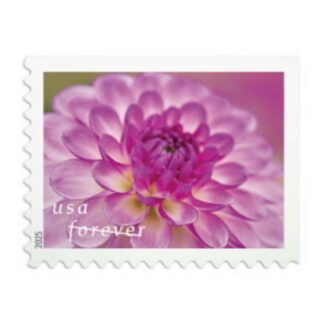
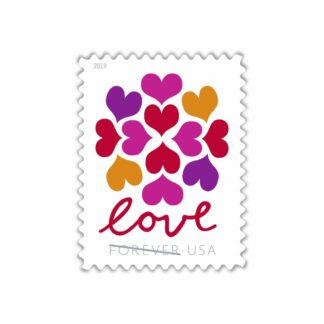
Alumni associations, nonprofits, schools, and member organizations mail in volume — reunion invitations, appeal letters, enrollment packets — and every one of those pieces rides on a stamp that has to be genuine. A bad batch does not just waste money; it produces returned mail, missed deadlines, and a credibility problem with the people you mailed. This article turns supplier vetting into an 8-point audit checklist, with receiving-inspection steps and the volume math for a typical institutional mailing.
Key Takeaways
- Audit a stamp supplier like any vendor: identity, inspection process, tracked shipping, returns, and pricing sanity against the $0.82 face value.
- Prices far below $0.82 are a red flag, not a bargain — counterfeit stamps are the most common failure mode in bulk buying.
- Always verify on a small first order, then scale. A supplier that passes a small order earns the large one.
- Inspect on arrival: count against the packing slip, check perforations and print, and photograph problems before use.
The 8-Point Supplier Audit
| # | Check | What passes |
|---|---|---|
| 1 | Business identity | Real business name, address, and contact channel — not only a checkout form |
| 2 | Product photography | Clear photos of the actual formats sold, not stock images of other sellers’ stock |
| 3 | Inspection process | A stated pre-dispatch inspection step the seller can describe in plain terms |
| 4 | Tracked shipping | Tracking on every order, with a delivery record you can file |
| 5 | Returns and shortages | A written policy for short counts and defective stock |
| 6 | Pricing sanity | Quotes anchored near the $0.82 face value — far below face value fails this check |
| 7 | Payment methods | Standard traceable payment; no pressure to pay by gift card or wire to a personal account |
| 8 | Verifiable track record | Reviews and mentions that can be traced to real buyers, not anonymous one-line praise |
Score a new supplier on a small first order — one roll, not one hundred. A supplier that is slow, vague, or defensive at small scale will not improve at large scale. Document the audit: who checked, what was checked, and what the result was. For a member organization, that record is what lets the next treasurer repeat the process instead of starting over.
Worked Example: An Alumni Mailing, Costed Honestly
Example — assumptions stated: an alumni association mails 4,000 reunion invitations (1-ounce letters) and 500 international invitations to overseas members.
| Piece | Quantity | Rate | Total |
|---|---|---|---|
| Domestic invitations | 4,000 | $0.82 Forever | $3,280.00 |
| International invitations | 500 | $1.75 Global Forever | $875.00 |
| Total postage | 4,500 | $4,155.00 |
That $4,155.00 is the number the audit protects. A counterfeit batch at a tempting price does not save a fraction of it — it risks the whole mailing, because returned and undelivered invitations cannot be re-sent on the original schedule. Price the risk into the decision, not just the unit cost.
Receiving Inspection: Five Minutes That Save a Mailing
- Count first. Count rolls and sheets against the packing slip before anything is shelved.
- Check perforations and print. Clean perforations, sharp printing, and consistent color across the batch.
- Spot-check a roll. Unroll a few feet and look for repeats, misprints, or damaged adhesive.
- Photograph problems immediately. A dated photo is the evidence a returns claim needs.
- File the record. Supplier, date, quantity, unit cost, and inspection result — one line per order.
For the counterfeit signs in detail, see our 2026 guide to spotting fake Forever stamps, and for scaling orders once a supplier passes, how to scale stamp buying without scaling risk. We publish our inspection-before-dispatch process, ship tracked, and stand behind counts — the same checks this article asks any supplier to pass.
Frequently Asked Questions
How should an institution vet a bulk stamp supplier?
Run the 8-point audit: business identity, real product photos, a stated inspection process, tracked shipping, a written returns policy, pricing anchored near the $0.82 face value, traceable payment, and a verifiable track record. Verify on a small first order.
Why are stamps sold far below face value risky?
A Forever stamp costs $0.82 at USPS. A seller offering stamps far below face value is either losing money on every sale or selling counterfeits — and counterfeit stamps are the common outcome. Returned mail and missed deadlines cost more than any apparent saving.
How much postage does a 4,000-piece alumni mailing need?
At the current rates, 4,000 one-ounce domestic letters cost 4,000 × $0.82 = $3,280.00. Add international pieces at $1.75 each — 500 of them cost $875.00 — for a $4,155.00 total.
What should we check when a stamp order arrives?
Count rolls and sheets against the packing slip, check perforations and print quality, spot-check a roll for misprints or damaged adhesive, and photograph any problem before use.
Should a nonprofit buy stamps from marketplaces?
For business mail, no. Marketplaces offer the weakest recourse when stock is counterfeit or short. Buy from USPS or an established bulk retailer with a written inspection and returns policy.
Sources
USPS Notice 123, effective July 12, 2026, for the $0.82 Forever rate, $0.29 additional ounce, $1.11 two-ounce letter, $0.65 postcard, $0.49 non-machinable surcharge, $1.69 large envelope, and $1.75 Global Forever rate. USPS Postal Store (usps.com) for the $1.31 Non-Machinable stamp as a single-use stamp ($0.82 + $0.49).
Audit first, then order in volume — a supplier that passes a small order earns the large one. Browse bulk Forever stamps by format — coils, sheets, and booklets — in our shop, or start with our Forever stamp buying checklist.

Former USPS clerk with 25 years of service, now retired in Florida. She writes about Forever Stamps for the website, offering reliable insights on postal changes, discount opportunities, and practical mailing solutions for households.