A property management company with 2,000 units does not mail in one burst. It mails three streams every month: the monthly statement, the quarterly community notice, and the past-due reminder, each on its own schedule. The mistake is treating all of it as one pile and ordering stamps when the drawer is empty. The fix is procurement: count each stream once, total the year, pick the format that fits the mailing desk, and set a reorder point. A 2,000-unit portfolio following the plan below mails 33,920 pieces a year and spends $27,814.40 on postage at $0.82 a standard 1 oz letter. This guide shows the three streams, the worked example, the format choice, and the reorder SOP that keeps the mailing on schedule.
Key Takeaways
- A property manager runs three mail streams: monthly statements to every unit, quarterly community notices to every unit, and past-due reminders to the small share of units that are late. Count each one separately, because each one has its own count and its own schedule.
- Example: a 2,000-unit portfolio mails 33,920 pieces a year — 24,000 monthly statements, 8,000 community notices, and 1,920 past-due reminders — for $27,814.40 in postage at $0.82 a letter.
- The monthly average is 2,827 pieces, or $2,317.87 in postage. A notice month runs 4,160 pieces and $3,411.20; a regular month runs 2,160 pieces and $1,771.20. Order against the notice month, not the average.
- A coil of 3,000 stamps costs $2,460.00 at face value and feeds the monthly statement run without stopping to reload. Booklets of 20 ($16.40) belong at the front counter, not in the mailing run.
- Set the reorder point at one coil left in the drawer: when the count falls to 3,000 stamps, order three coils for the quarter. Count the stamps on receipt, every time.
The Three Mail Streams a Property Manager Runs Every Month
Most property managers mail from habit, not from a plan: someone notices the statements are due, someone else notices the community notice is late. A procurement plan starts by naming the streams and counting them. There are three, and the table below lists them with the annual count from the worked example later in this article.
| Mail stream | Pieces per year | Postage per year at $0.82 | When it goes out |
|---|---|---|---|
| Monthly statements | 24,000 | $19,680.00 | First week of every month, 2,000 pieces |
| Community notices | 8,000 | $6,560.00 | Quarterly, 2,000 pieces each, in January, April, July, and October |
| Past-due reminders | 1,920 | $1,574.40 | Every month, about 160 pieces, to units past due |
| Total | 33,920 | $27,814.40 | Every month, 2,160 to 4,160 pieces |
The monthly statement is the backbone: 24,000 of the 33,920 pieces, more than two-thirds of the program. It is also the stream that cannot slip, because a statement that arrives late is a rent payment that arrives late. Fix the statement schedule first — same mailing day every month, same count, same stamp stock — and the other two streams fit around it. The community notice is the stream with a legal edge: fee changes, rule changes, and meeting notices have to reach every unit, and a notice that never arrived is a dispute. The past-due reminder is the stream that pays for itself: a reminder that goes out on time is a payment that comes in on time. For the same volume math applied to a single large campaign, see our 10,000-piece mailing calculator.

Worked Example: A 2,000-Unit Portfolio
Example — assumptions: a property management company with 2,000 units under management. Every unit receives a monthly statement, 12 times a year. Every unit receives a community notice once a quarter, 4 times a year. About 8% of units are past due in a typical month, so about 160 past-due reminders go out each month. Every piece is a standard 1 oz rectangular First-Class letter at $0.82 with one Forever stamp. No piece is square, oversized, or over 1 oz, so no surcharge applies.
| Stream | Calculation | Pieces | Postage |
|---|---|---|---|
| Monthly statements | 2,000 units x 12 months | 24,000 | $19,680.00 |
| Community notices | 2,000 units x 4 quarters | 8,000 | $6,560.00 |
| Past-due reminders | 160 units x 12 months | 1,920 | $1,574.40 |
| Annual total | 33,920 pieces x $0.82 | 33,920 | $27,814.40 |
Three numbers from this example drive the ordering decision. First, the monthly average is 2,827 pieces, or $2,317.87 in postage. Second, a notice month runs 4,160 pieces, so a single order should never be smaller than one coil of 3,000 stamps, and the quarterly order should be three coils. Third, a quarter of this program is 8,480 pieces, so three coils of 3,000 stamps ($7,380.00) cover the quarter with 520 stamps left over as a buffer. A smaller portfolio scales the same way — halve the units and the annual total halves to 16,960 pieces and $13,907.20. For the format choice behind the coil, see our coils, sheets, and booklets guide.
The Monthly Calendar: When the Mail Peaks
A procurement plan is a calendar, not a pile of envelopes. The table below is the full year for the example above: the statement goes out every month, the notice lands once a quarter, and the reminder follows the delinquency rate. Add the pieces column and it totals 33,920; add the postage column and it totals $27,814.40. Pin this table above the mailing desk, and check off each row as it goes out.
| Month type | What goes out | Pieces | Postage at $0.82 |
|---|---|---|---|
| Notice month (January, April, July, October) | Statements (2,000) + community notice (2,000) + past-due reminders (160) | 4,160 | $3,411.20 |
| Regular month (the other 8 months) | Statements (2,000) + past-due reminders (160) | 2,160 | $1,771.20 |
| Year total | 12 statement runs + 4 notice runs + 12 reminder runs | 33,920 | $27,814.40 |
Two dates on this calendar deserve a flag. First, the January community notice is the one that carries the new year’s fee schedule and the annual meeting notice, and it should be in the mail in the first two weeks of January — residents budget on it, and a fee change that arrives late is a dispute. Second, the December statements are holiday mail: USPS recommends mailing First-Class holiday cards by December 17, so the December statement run should be posted by the second week of December, not the third, and any holiday community notice should go with it. The rest of the calendar is forgiving; those two rows are not.
Coils, Sheets, or Booklets: Picking the Format
The statement run is a volume job: 2,000 identical envelopes, every month, on the same day. That job wants a coil, because a coil feeds a run without stopping to reload. The front counter wants the opposite: a booklet that splits across desks and hands out one stamp at a time. The table below matches each format to its job, with the face-value cost of each pack so the buyer can compare.
| Format | Best for | Pack size | Face value per pack at $0.82 |
|---|---|---|---|
| Coil of 3,000 | The monthly statement run and any run over 1,000 pieces | 3,000 stamps | $2,460.00 |
| Coil of 500 | A single property or a small portfolio’s monthly run | 500 stamps | $410.00 |
| Pane of 20 | The front counter and small reminder batches | 20 stamps | $16.40 |
| Booklet of 20 | Staff desks and managers who mail a few pieces a day | 20 stamps | $16.40 |
One rule covers the choice: buy the format the mailing desk actually uses, not the format with the lowest unit price, because every format costs the same $0.82 a stamp at face value — the difference is handling time, not postage. A coil saves the hour the statement run would otherwise spend reloading sheets. A booklet saves the trip to the drawer for the manager who mails three letters a day. Keep the envelope rectangular and under 1 oz either way: a square envelope triggers the $0.49 non-machinable surcharge, so a square 1 oz statement mails at $1.31, not $0.82.
Ordering and Stocking: The Reorder SOP
Order by the quarter, not by the month. A quarter of this program is about 8,480 pieces, which is three coils of 3,000 stamps ($7,380.00) with 520 stamps left over as a buffer. Set the reorder point at one coil left in the drawer: when the count falls to 3,000 stamps, order three more coils. The SOP below is the whole system, and it fits on one page.
| Step | What to do | When |
|---|---|---|
| 1. Count on receipt | Count every coil on arrival — a coil of 3,000 should be 3,000 stamps — and log the count | Every delivery, before the stock goes in the drawer |
| 2. Count the drawer | Count the stamps in the drawer and write the number on the stock card | First Monday of every month |
| 3. Check the reorder point | If the drawer holds 3,000 stamps or fewer, place the quarterly order the same day | At the monthly count, and before every notice month |
| 4. Order three coils | Order three coils of 3,000 stamps ($7,380.00) to cover the next quarter | When the reorder point is hit |
| 5. Clean the list | Every returned envelope is a unit that moved — update the address list before the next run | After every mailing |
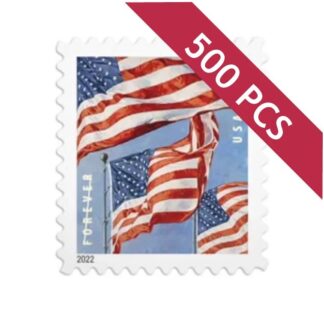
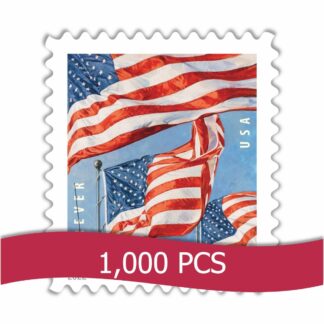
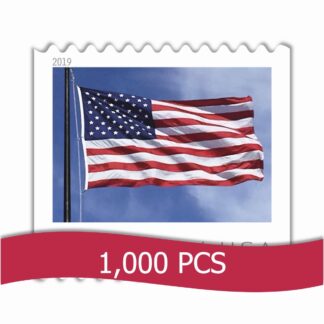
We carry Forever stamps in bulk packs of 100, 500, and 1,000 pieces, in coils, booklets, and panes, so a property manager can order the format that fits the mailing desk — coils for the monthly statement run, booklets for the front counter. Order from the bulk and wholesale stamp packs at the start of each quarter, while the drawer still holds a month of mail. Forever stamps never expire, so stock bought this quarter is still good after any future price increase, and a drawer holding a quarter of the program is the difference between mailing the statements on schedule and mailing them late. See the bulk Forever stamp packs and match the order to the quarter on the calendar above.

The Verdict: Count the Streams, Then Order by the Quarter
A property management mailing program is three streams on one calendar: a monthly statement to every unit, a quarterly community notice to every unit, and a monthly past-due reminder to the units that are late. Count each stream once, total the year, and order a quarter at a time. For the example in this guide — 2,000 units — that is 33,920 pieces and $27,814.40 a year at $0.82 a letter, in coils of 3,000, ordered when one coil is left. The program costs nothing to set up. It costs $0.82 a piece to run, and it runs on time when the drawer is never empty.
Frequently Asked Questions
How many stamps does a property management company need per year?
It depends on the portfolio, but the example in this guide — 2,000 units — mails 33,920 pieces a year: 24,000 monthly statements, 8,000 quarterly community notices, and 1,920 past-due reminders. At $0.82 a standard 1 oz First-Class letter, that is $27,814.40 in postage a year.
How many stamps should a property manager keep in stock?
Keep at least one month of mail in the drawer at all times, and set the reorder point at one coil of 3,000 stamps. A 2,000-unit portfolio uses about 2,827 stamps a month on average, so a coil lasts about a month and three coils cover a quarter.
Should a property manager buy stamps in coils or booklets?
Coils for the statement run and booklets for the counter. A coil of 3,000 feeds a 2,000-piece monthly statement run without stopping to reload. Booklets of 20 are easier to split across desks and offices for the few letters a day the front counter mails.
What size envelope should a property manager use for statements?
A standard rectangular #10 envelope, under 1 oz, so the statement mails at $0.82 with one Forever stamp. A square envelope triggers the $0.49 non-machinable surcharge, so a square 1 oz statement mails at $1.31, not $0.82.
When should a property manager mail the annual fee notice?
In the first two weeks of January, with the January statement run. Residents budget on the new fee schedule, and a fee change that arrives late is a dispute. December statements should be posted by the second week of December, since USPS recommends mailing First-Class holiday mail by December 17.
Sources
- USPS Notice 123, Price List — current First-Class Mail rates: $0.82 for a 1 oz letter, $1.11 for 2 oz, $0.65 for a postcard, $0.29 per additional ounce, and the $0.49 non-machinable surcharge.
- USPS, First-Class Mail — 1 to 5 day service standard for First-Class Mail.

Former USPS employee with 5 years of service and 25 years in corporate mailing management. Certified in Mail Systems Management and trained at the USPS Business Mail Academy, Kobe now shares trusted guidance on U.S. postage stamps and safe buying practices after retiring in 2023.