A business that mails every day faces the same choice every time it reorders: coils, sheets, or booklets. The short answer is that the format does not change the postage. One Forever stamp covers a standard 1 oz First-Class letter at $0.82 whether it comes off a roll, out of a booklet, or off a pane. What changes is the labor: how fast your team can affix the stamps, how much space the stock takes up, and how often someone has to stop and reload. Pick the format that fits your daily volume, not the one with the lowest sticker price, because at $0.82 a stamp they are all the same price.
Key Takeaways
- Postage is $0.82 a letter in every format. A coil of 100 costs $82.00, a booklet of 20 costs $16.40, and a pane of 20 costs $16.40 — the same $0.82 per stamp.
- Coils win above roughly 500 pieces a day, because a roll feeds an affixer or a fast hand without stopping. Booklets and panes win below that, because they are easier to count, split, and hand out.
- A business mailing 500 letters a day, 250 days a year, sends 125,000 letters and spends $102,500 on postage. Format choice is a labor decision worth a few hundred dollars of staff time, not a postage decision.
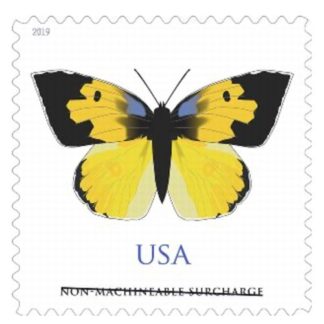
- Keep every envelope rectangular and 1 oz. A square envelope triggers the $0.49 non-machinable surcharge, so a square letter mails at $1.31, not $0.82.
The Three Formats, Side by Side
USPS sells Forever stamps in three physical formats. Coils are rolls of stamps, sold in rolls of 100 and 3,000, with the U.S. Flag design also available in a 10,000-stamp coil. Booklets hold 20 stamps under a cover. Panes, also called sheets, hold 20 stamps on a flat sheet. Every format holds the same stamp, and every stamp is worth the current 1 oz First-Class rate for as long as it exists, because Forever stamps never expire.
| Format | Stamps per unit | Cost per unit | Best for | Watch out for |
|---|---|---|---|---|
| Coil of 100 | 100 | $82.00 | Daily mailings of 100 to 500 pieces | Needs a flat surface or dispenser; a dropped roll tangles |
| Coil of 3,000 | 3,000 | $2,460.00 | Daily mailings above 500 pieces, or a month of mail at once | Heavy and bulky; store flat, never stacked on edge |
| Coil of 10,000 (U.S. Flag) | 10,000 | $8,200.00 | High-volume mailrooms running 1,000+ pieces a day | One roll is a serious cash commitment; count on receipt |
| Booklet of 20 | 20 | $16.40 | Small daily batches, field staff, and split orders | Slowest to affix at volume; covers tear if rushed |
| Pane (sheet) of 20 | 20 | $16.40 | Desk use and mixed mail where stamps are counted out | Tears along perforations if the sheet is bent |
The unit prices are simple arithmetic at the $0.82 rate, and that is the point: no format carries a postage discount. A seller offering a “bulk discount” on the stamp itself is selling below face value, which is the first sign of a counterfeit. The savings in format choice come from labor and waste, not from the price of the stamp.

What Each Format Costs at Real Daily Volumes
Run the volume math before choosing. The table below assumes a standard 1 oz letter at $0.82, mailed 250 business days a year. The postage column is identical for every format at the same volume, so the decision is about how many minutes a day your team spends putting stamps on envelopes.
| Letters per day | Letters per year | Postage per year at $0.82 | Format that fits |
|---|---|---|---|
| 50 | 12,500 | $10,250.00 | Booklets or panes; one booklet lasts most of a week |
| 100 | 25,000 | $20,500.00 | Coil of 100 or booklets; one roll a day |
| 250 | 62,500 | $51,250.00 | Coil of 100, two to three rolls a day |
| 500 | 125,000 | $102,500.00 | Coil of 3,000; one roll lasts six working days |
| 1,000 | 250,000 | $205,000.00 | Coil of 3,000 or 10,000 (Flag); consider a stamp affixer |
At 500 pieces a day, the difference between peeling stamps from booklets and tearing them from a coil is roughly an hour of staff time a day. At that volume a coil is not a preference, it is the only format that keeps the mailing on schedule. Below 100 pieces a day, the difference is minutes, and booklets are easier to count, hand to a second person, or split across two desks. If you are not sure of your volume, start with booklets and count the pieces for two weeks. The count tells you which format to order next. For a worked example of the same math at campaign scale, see our 10,000-piece mailing calculator.
The Daily SOP: From Inbox to Post Office
A format only saves time inside a routine. The routine below works at any volume, and the format plugs into step three.
- Count the day’s mail first. Sort the finished letters, count them, and write the count on the batch sheet. The count is the order quantity for tomorrow.
- Weigh one finished envelope. A 1 oz letter takes one Forever stamp. A 2 oz letter takes $1.11 in postage. A piece over 3.5 oz is no longer a letter. Postage is set by the weighed piece, not by the template.
- Affix stamps by format. From a coil, tear or cut the day’s run in one strip and work down the stack without stopping. From a booklet or pane, peel and place in the same motion, one envelope at a time, and keep the finished stack separate from the un-stamped stack so a piece is never stamped twice or missed.
- Check the envelope shape before sealing. Square envelopes and rigid pieces trigger the $0.49 non-machinable surcharge, so a square 1 oz letter mails at $1.31, not $0.82. Keep the envelope rectangular and flexible, and the surcharge never applies.
- Batch by 250 and carry the mail to the Post Office. A thousand pieces dropped in a street collection box can sit until the next pickup. Hand the batch over the counter and get a receipt.
- Log the count and the format used. Date, pieces, format, and stamps left in the drawer. When the log shows a coil lasting six days, the reorder point is obvious: order when two coils remain, not when the drawer is empty.
Ordering and Storing a Format That Fits
Order the format you actually use, in the quantity your count supports. A business mailing 500 letters a day uses 3,000 stamps in six working days, so a 3,000-stamp coil is one order a week and the drawer never holds more than two rolls. A business mailing 50 letters a day uses a booklet of 20 in less than half a day, so a 500-stamp order is ten booklets, or 25 days of mail, and the drawer holds a month of stock without a second thought. We carry Forever stamps in bulk packs of 100, 500, and 1,000 pieces, in coils, booklets, and panes, so the order matches the format your team already works with. Order from the bulk and wholesale stamp packs while the stock is still comfortable, not on the day it runs out. Forever stamps never expire, so stock bought this month is still good after any future price increase, and a drawer of the right format is the difference between mailing on time and mailing late. If your volume is still growing, our real estate farming budget guide shows the same volume math applied to a 1,000-piece monthly campaign. See the bulk Forever stamp packs and match the format to your daily count.
The Verdict: Match the Format to the Count
There is no best format in the abstract. There is a best format for your daily count. Under 100 pieces a day, booklets and panes are easier to count and share. From 100 to 500 a day, a coil of 100 keeps the work moving. Above 500 a day, a coil of 3,000 is the working format, and a 10,000-stamp Flag coil is the standing order for a mailroom that never stops. Count the mail for two weeks, pick the format that fits the count, and reorder before the drawer is empty. That is the whole decision.
Frequently Asked Questions
Do coils, sheets, and booklets cost the same per stamp?
Yes. One Forever stamp covers a standard 1 oz First-Class letter at $0.82 in every format. A coil of 100 costs $82.00, a booklet of 20 costs $16.40, and a pane of 20 costs $16.40 — the same $0.82 per stamp. The formats differ in labor and storage, not postage.
Which stamp format is best for a business that mails 500 letters a day?
A coil of 3,000. At 500 pieces a day, a 3,000-stamp coil lasts six working days, and tearing stamps from a roll is far faster than peeling them from booklets. A business at that volume spends $102,500 a year on postage at $0.82 a letter.
How many stamps are in a coil, a booklet, and a pane?
Coils come in rolls of 100 and 3,000, and the U.S. Flag design is also sold in a 10,000-stamp coil. Booklets hold 20 stamps and panes hold 20 stamps. Every format holds the same Forever stamp, valid for a 1 oz First-Class letter.
Can a business use booklets for daily mailings?
Yes, below about 100 pieces a day. Booklets are easy to count, split across desks, and hand to field staff. Above that volume, peeling stamps from booklets costs roughly an hour of staff time a day, and a coil is the better format.
Does a square envelope cost more to mail?
Yes. A square envelope triggers the $0.49 non-machinable surcharge, so a square 1 oz letter mails at $1.31, not $0.82. Keep envelopes rectangular and flexible to avoid the surcharge. The $1.31 figure is the stamp value for a non-machinable letter: $0.82 plus the $0.49 surcharge.
Sources
- USPS Notice 123, Price List — current First-Class Mail rates: $0.82 for a 1 oz letter, $1.11 for 2 oz, $0.65 for a postcard, $0.29 per additional ounce, and the $0.49 non-machinable surcharge.
- USPS, First-Class Mail — 1 to 5 day service standard for First-Class Mail.

Former USPS employee with 5 years of service and 25 years in corporate mailing management. Certified in Mail Systems Management and trained at the USPS Business Mail Academy, Kobe now shares trusted guidance on U.S. postage stamps and safe buying practices after retiring in 2023.