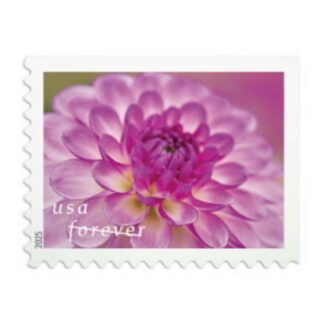
The most useful stamp in a working mailroom is the one most offices do not stock. The additional-ounce stamp — the 29-cent Bunny, the School Bus — is the difference between paying $1.11 for a 2-ounce letter and paying $1.64 for it in double Forever stamps. It is a small denomination with a large job: it turns every heavy letter into an exact-postage letter, and it costs $29.00 a roll to keep on hand.
Key Takeaways
- An additional-ounce stamp is worth $0.29. One Forever stamp ($0.82) plus one additional-ounce stamp totals exactly $1.11 for a 2-ounce letter.
- Additional-ounce stamps are fixed denominations, not Forever stamps: if USPS raises the additional-ounce rate, old stock is only worth 29 cents.
- The Bunny design is the current additional-ounce issue on the USPS Postal Store; the School Bus and Wedding Blooms cover the 2-ounce and 3-ounce tiers.
- Keep one roll of additional-ounce stamps for every five rolls of Forever stamps, and tape the tier table above the scale.
What the stamp is, and what it is not
An additional-ounce stamp is a postage stamp worth $0.29 that you add to a letter already carrying a Forever stamp when the letter weighs more than one ounce. It is always used alongside a primary stamp, never on its own. Every extra ounce — or any fraction of one — after the first needs its own additional-ounce stamp, up to the 3.5-ounce limit for First-Class letters. The USPS Postal Store lists the current issues: the Bunny as the additional-ounce stamp, the School Bus as a 2-ounce combination, and Wedding Blooms as a 3-ounce combination.
All prices here are the USPS retail rates in force since July 12, 2026, under Notice 123: Forever $0.82 for a standard 1-ounce letter, each additional ounce $0.29, a 2-ounce letter $1.11, a 3-ounce letter $1.40, a 3.5-ounce letter $1.69, a postcard $0.65, and a Global Forever stamp $1.75. The metered 1-ounce rate is $0.78, but that is a metered rate — a stamped letter prices at $0.82, and the additional-ounce math starts from the stamp rate. Do not confuse the two columns.
Example: a publisher’s 600 submissions a year
Example — stated assumptions: a small publisher mails 600 manuscript submissions and contract packets a year. Half weigh 1 ounce; half weigh 1.8 ounces and price at the 2-ounce tier. The office compares paying the 2-ounce tier correctly against double-stamping.
| Method for 300 two-ounce packets | Per piece | Annual cost | Overpayment |
|---|---|---|---|
| Forever + additional-ounce | $1.11 | $333.00 | $0 |
| Single 2-ounce stamp | $1.11 | $333.00 | $0 |
| Two Forever stamps | $1.64 | $492.00 | $159.00 |
The 300 one-ounce packets cost $246.00 either way. The whole program is $579.00 done correctly against $738.00 double-stamped — a $159.00 annual saving from one roll of 29-cent stamps that costs $29.00 to stock. The same arithmetic scales: at 250 two-ounce pieces a month, the overpayment is $1,590 a year, as our double-stamp piece works out at Two Forever Stamps on a 2-Ounce Letter? The 53-Cent Mistake, Priced Out.
The desk-drawer checklist
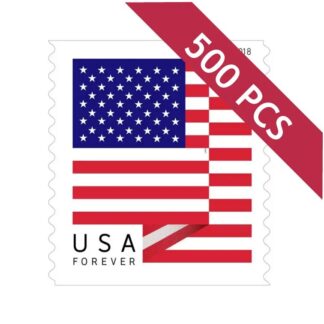
Stock the drawer in pairs: Flag coil rolls for the first ounce, additional-ounce rolls for every ounce after. One roll of additional-ounce stamps per five rolls of Forever stamps fits most offices; count both rolls on the same monthly count day and reorder both at the same trigger. Weigh a finished sample of every recurring packet type once and write its tier on the job sheet — 1 ounce, 2 ounces, 3 ounces — so nobody re-weighs the same packet twice. Keep a digital postal scale on the bench; a basic model costs less than one year of double-stamp overpayment at this volume.
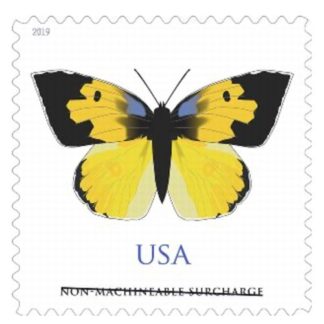
Watch the surcharge separately. A square, rigid, or lumpy envelope adds the $0.49 non-machinable surcharge on top of the tier price: a 1-ounce rigid letter is $1.31, and a 2-ounce square mailer is $1.60 ($1.11 + $0.49). The Butterfly non-machinable stamp covers a 1-ounce non-machinable letter in a single stamp at $1.31 — the 49-cent figure is the surcharge alone, never the stamp. If a packet fails the flex test, it takes the surcharge whatever stamps are on it.
When to use the combination stamps instead
For mailings where every piece is the same weight — a 400-invitation gala run, a quarterly contract batch — a single 2-ounce stamp is faster to affix than a pair. The USPS sells 2-ounce stamps at $1.11 and 3-ounce stamps at $1.40, and for a uniform run they are the cleaner choice. For mixed mail, where one envelope is 1 ounce and the next is 2.4, the Forever-plus-additional-ounce pair is more flexible: the same two rolls cover every tier from 1 to 3.5 ounces. Most offices stock both — combination stamps for the uniform runs, the pair for everything else — and the drawer stays at three rolls instead of ten.
Verdict
The 29-cent stamp is the cheapest accuracy a mailroom can buy. One roll costs $29.00, it converts every heavy letter to exact postage, and it pays for itself the first month a 2-ounce batch goes out correctly. Stock bulk Forever stamps and additional-ounce rolls together, weigh each recurring packet once, and stop funding the 53-cent habit. The full tier table lives in our guide to 2026 Forever stamp prices, weights, and mailing rules — tape it above the scale and the drawer does the rest.
Frequently Asked Questions
What is an additional-ounce stamp worth?
$0.29. It supplements a Forever stamp on a letter over one ounce; it never covers a letter on its own.
Can I use an additional-ounce stamp by itself?
No. It is always paired with a Forever stamp or another primary stamp. A letter carrying only a 29-cent stamp is underpaid.
What does the Bunny stamp cover?
The Bunny is the current additional-ounce issue, worth 29 cents. The School Bus covers the 2-ounce tier at $1.11 and Wedding Blooms covers the 3-ounce tier at $1.40.
Do additional-ounce stamps expire?
They do not expire, but they are fixed denominations, not Forever stamps. If USPS raises the additional-ounce rate, old stock is still only worth 29 cents.

Stamp enthusiast and part‑time columnist based in Los Angeles. With a background in office administration and a personal passion for collecting Forever Stamps, she provides readers with practical tips on buying, storing, and using stamps effectively.