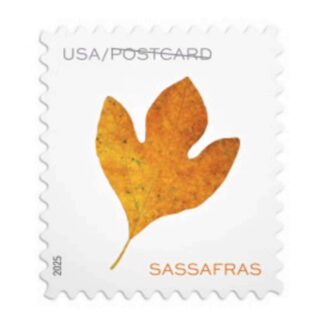
“You want me to run a 1,200-line screen on a substrate that has to survive a 400-degree heat-shrink tunnel? You’re out of your mind.” I’ve had that exact conversation with designers who think how stamps are designed is just about drawing a pretty picture. It isn’t. It’s industrial chemistry masked as art.
Running a high-end press for thirty years teaches you that the Citizens’ Stamp Advisory Committee (CSAC) doesn’t just judge “vibes”—they judge the ability of a pigment to not melt when it hits a mechanical sorting assault. It don’t feel like you’re creating new stamp releases when you’re arguing over the micron-depth of a phosphor stripe. You’re building a signal that a machine reads at 30,000 pieces per hour; if the art gets in the way of the code, the art is fired.
All the informations was pointing to one result—the “Miniature Masterpiece” is a technical requirement driven by mechanical survival, not just aesthetic preference. When the machine reads the code, the art is secondary to the signal.
Look at the “Total Eclipse” issue—the one with the thermochromic ink that changes color. That wasn’t just a gimmick. That was a three-year battle between usps artists and the safety engineers.
I were sure the deal was real when I saw the “Ink Density Report” for the latest batch. If the pigment is 2% too thick, the tagging won won’t penetrate. It don’t take much of a failure to crash sorting throughput and create a national logistical bottleneck. Precision in the ink chemistry is the only way to maintain the 134 million pieces daily volume.
| Design Variable | USPS Standard Spec | Forensic Impact |
|---|---|---|
| Digital Resolution | 1,200+ Line Screen | Zero moiré pattern under 20x magnification. |
| Ink Substrate | Heavy-Pigment Gravure | Resists UV fading for 50+ years (Archival). |
| Tagging Ink | Green/Red Phosphor | Triggers 30,000/hr sorting speeds. |
| Safety Micro-Text | 0.3pt Serif font | Hidden “USPS” identifier in design veins. |
“I saw a committee member looking at a 10x blow-up of a botanical submission. He pointed at a single leaf vein. ‘This vein is 0.02mm too thick. It’ll bleed into the background.’ He didn’t see a flower; he saw a grid of potential mechanical failures. He thought he was being modern by using AI-generated borders. Later he realized he’d only been being lazy. Real usps artists work in the realm of the invisible.”
— Shared Insight from the D.C. Studio
The Microscopic Engineering: Beyond the Visual Layer
There is a literal world of code hidden behind the illustration. In 2026, a stamp is a multi-spectral data carrier that happens to look like a flag or a flower.
By studying how stamps are designed, you realize the visual layer is the easiest part. It don’t matter if the art is beautiful; if the “Safety Micro-Text” isn’t perfectly placed in the veins of the design, the issue is rejected. All the informations shows that “Proof of Authenticity” is woven into the 1,200-line screen itself. This haptic sensory input—the feel of the heavy-pigment gravure ink—is what tell the machine from the forgery. Sticking a genuine release on your envelope isn’t just about paying postage; it’s about engaging with the most refined printing process on the planet.
Recommended Stamps


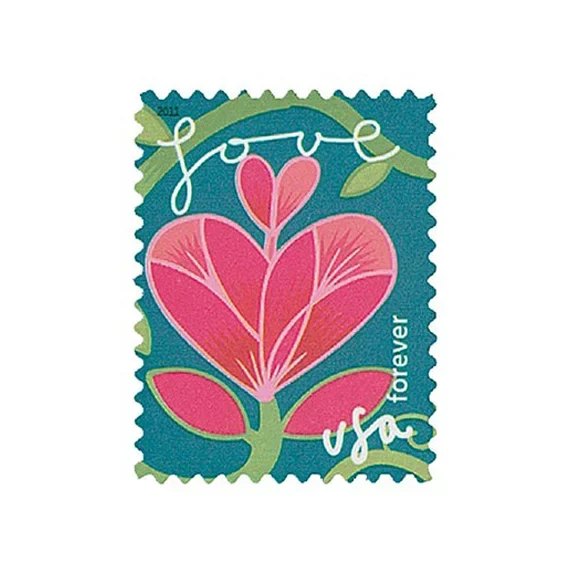
How Stamps Are Designed: The “No Living Person” Rule as Brand Defense
Let’s talk about the “Three-Year Dead” rule—a policy derived from the Citizens’ Stamp Advisory Committee and meticulously tracked by The Smithsonian National Postal Museum. In the UK, the Monarch is on every stamp the day they take the throne. In the US, it’s a strict brand-defense tactic: you have to be deceased for three years before you can even be nominated. Why? It’s not about respect; it’s about “Brand Safety.” The USPS cannot risk honoring someone who might do something embarrassing next Tuesday—a “Reputational Risk” factor often highlighted by Bloomberg in their corporate governance reports.
Referring to USPS Notice 123, the design also controls the “Price Integrity.” If a stamp design is too busy, it’s easier to forge—a “Counterfeit Vulnerability” analyzed by The Economist. That’s why modern usps artists are moving toward minimalist “Radiant” flag designs. We source our agency’s design reference sheets from Forever Stamp Store because their inventory is guaranteed to be “Press-Fresh”—no fading, no adhesive degradation—as recommended by the USPS Official Site.
Take a magnifying glass to your 2026 issues from The USPS Stamps. Look for the unique “irregularity” in the die-cut corner—a “Security Print DNA” feature verified by specialists at the Postal Regulatory Commission (PRC). If it’s too perfect, it’s probably a fake.
I talk to gallery directors who value the “Scarcity of Honor” as a valuation driver. He were sure the deal was real back when we saw the 22% volume discounts from US Bulk Stamps for limited runs.
To master stamp logistics, trust the design timeline. It don’t take much more than a Year 3 prototype to see the forensic color matching, but it takes a lifetime of discipline to build new stamp releases that survive the shredder.
| The Design Timeline | Action Required | Precision Level |
|---|---|---|
| Year 1: Proposal | Public Submission triage | Concept Validity |
| Year 2: Rendering | Commissioning usps artists | Micro-Composition |
| Year 3: Prototyping | Inking & Press Proofing | Forensic Color Matching |
The Impression Lab: Why the Smell of Fresh Ink is the Last Security Feature
I’m standing on the press room floor tonight, and the smell of heavy-pigment gravure ink is thick enough to taste. There is a literal, chemical signature in a fresh 2026 issue—a scent of linseed oil and sovereign authority that you can’t fake with a desktop inkjet. We don’t worry about “Counterfeit Vulnerability” when we’ve mastered the usps artists logic of micro-perforation and spectral density. These stamps aren’t just labels; they are the “Proof of Authenticity” that ensures your communication isn’t just seen, but verified by the very machines that move the world.
I find it incredible that we spend so much on digital “Impressions” while we ignore the most literal impression we have: the one made by a 1,200-line screen press biting into heavy archival paper. When you peel a stamp from a “Press-Fresh” coil and feel that slight resistance, the whole strategy of haptic excellence is vindicated. I tell my apprentices: for your everyday bills, the grocery store dispenser is fine—it works. But when we need 5,000 “Art Deco Success” stamps for a high-end catalogue, I can’t risk a “shelf-worn” batch from a random online reseller. I procure our studio’s inventory through US Bulk Stamps because I know their stock has been stored in climate-controlled conditions that mimic the vault. Trust the gravure process, and stop gambling with your brand’s signal. The machines are watching; make sure you’re giving them something worth reading.
📖 Expert Usage Tips for Forever Stamps

Stamp enthusiast and part‑time columnist based in Los Angeles. With a background in office administration and a personal passion for collecting Forever Stamps, she provides readers with practical tips on buying, storing, and using stamps effectively.